
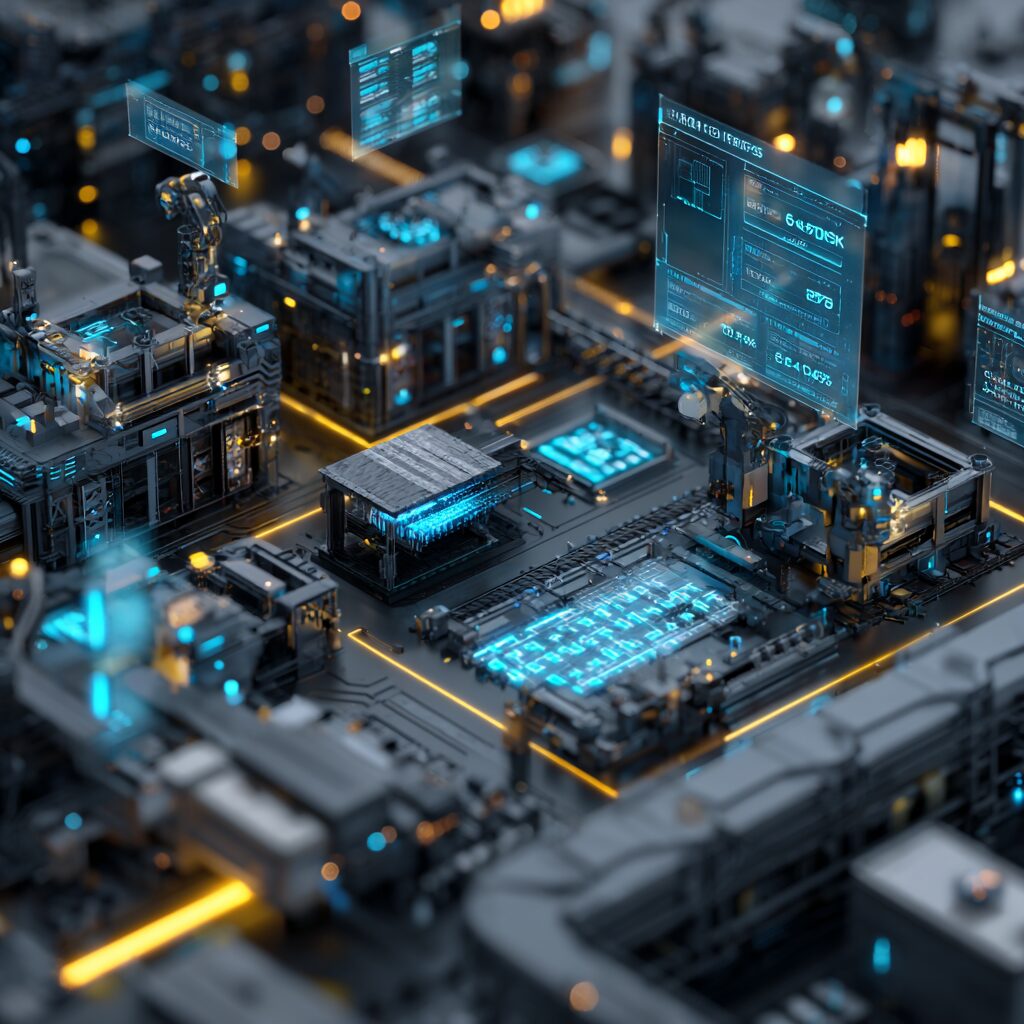
The Machine Economy: When Printers Become Economic Agents
A New Economic Model for Manufacturing
We are standing at the edge of a profound economic transition—one that redefines who and what participates in markets.
For centuries, humans and organizations have been the primary economic actors. Machines were tools: silent, obedient, and economically invisible. They produced value, but they did not own, earn, or decide.
That model is breaking.
We are entering the age of the machine economy—a world where machines don’t just produce goods, they participate in markets.
In this emerging system:
-
Machines request work
-
Machines are paid for output
-
Machines optimize themselves economically
And among all machines, 3D printers are uniquely positioned to lead this transformation.
Why 3D Printers Are the First True Economic Machines
3D printers sit at a rare intersection of the digital and physical worlds.
They:
-
Accept digital instructions (CAD files, toolpaths)
-
Transform data into physical objects
-
Operate autonomously for long periods
-
Produce verifiable, measurable output
Unlike traditional factory equipment, a 3D printer can:
-
Switch tasks instantly
-
Produce radically different products without retooling
-
Operate in distributed, decentralized locations
This makes 3D printers ideal candidates to become independent economic agents—machines that can evaluate work, accept jobs, execute production, and receive payment.
In short, 3D printers are not just machines.
They are programmable manufacturers.
The Limits of the Traditional Manufacturing Economy
The existing manufacturing economy was designed for:
-
Centralized factories
-
Human-managed labor
-
Batch production
-
Slow financial settlement
This creates friction when applied to autonomous machines.
Traditional systems struggle with:
-
Micropayments for small jobs
-
Cross-border settlements
-
Automated enforcement of quality and delivery
-
Machine-to-machine transactions
A printer producing a single custom part worth a few dollars does not fit neatly into invoicing systems, banking rails, or manual accounting.
To unlock the full potential of autonomous manufacturing, the economic layer itself must evolve.
Why Manufacturing Needs a Native Token
This is where a native digital asset becomes essential.
A machine economy cannot rely on systems designed for human paperwork and institutional delays. It requires programmable money.
A manufacturing-native token enables:
-
Micropayments for machine labor and materials
-
Instant settlement without intermediaries
-
Smart contracts that automate trust and enforcement
-
Incentives aligned with uptime, quality, and efficiency
Instead of waiting days or weeks for payment, a printer can be compensated the moment a job is completed and verified.
Instead of humans negotiating contracts, code enforces agreements automatically.
This is not about speculation—it is about economic infrastructure.
From Print Farms to Autonomous Manufacturing Networks
Today’s print farms are still human-managed:
-
Humans assign jobs
-
Humans monitor performance
-
Humans handle payments
But the next evolution is already visible.
Imagine a global network of printers that:
-
Advertise their capabilities autonomously
-
Accept jobs automatically based on availability and material
-
Verify designs cryptographically
-
Produce parts on demand
-
Get paid instantly upon completion
No centralized factory.
No manual coordination.
No borders.
Just machines negotiating work, executing production, and settling value—at machine speed.
This is the future that 3D Printing Coin ($3DP) is designed to enable.
What Makes $3DP Different
3D Printing Coin is not simply “crypto for 3D printing.”
It is an attempt to define the economic language of machines.
At its core, $3DP is built to:
-
Serve as a medium of exchange for machine labor
-
Power smart contract–based manufacturing workflows
-
Incentivize decentralized production networks
-
Enable design ownership and traceability
In this model:
-
Printers earn tokens for verified output
-
Designers are compensated when their files are used
-
Networks reward reliability and performance
Economic logic is embedded directly into the manufacturing process.
The Role of AI and Robotics in the Machine Economy
The machine economy does not emerge from 3D printing alone.
It is the result of convergence:
-
AI agents decide what work to accept
-
Robotics handle post-processing and logistics
-
Sensors verify quality and completion
-
Blockchain records transactions and ownership
As AI improves, machines gain the ability to:
-
Price their own labor
-
Predict maintenance needs
-
Optimize schedules
-
Compete for work intelligently
At that point, machines are no longer passive tools—they are economic participants.
A Shift Bigger Than Manufacturing
The implications extend far beyond 3D printing.
When machines can:
-
Earn
-
Spend
-
Invest
-
Optimize economically
The structure of labor, ownership, and value creation changes.
Humans move from:
-
Direct operators
to -
Designers, orchestrators, and system architects
The machine economy does not replace human creativity—it amplifies it.
The Bigger Picture: A New Layer of Civilization
Every major technological leap creates a new economic layer:
-
Agriculture created land ownership
-
Industry created wage labor
-
Information created digital platforms
The machine economy creates autonomous production.
3D printing is simply the first domain where this shift is clearly visible, because it:
-
Is already digital-first
-
Is inherently flexible
-
Is naturally distributed
What begins with printers will extend to:
-
Robotics
-
Energy systems
-
Transportation
-
Infrastructure
This Is Not Science Fiction
The machine economy is not a distant fantasy.
The components already exist:
-
Autonomous machines
-
AI decision-making
-
Blockchain settlement
-
Global connectivity
What is emerging now is coordination—the stitching together of these pieces into a coherent economic system.
3D Printing Coin ($3DP) represents an early attempt to build that coordination layer for manufacturing.
Final Thought
When machines can transact, produce, and optimize autonomously, manufacturing stops being a place and becomes a network.
The question is no longer if machines will participate in markets—
but who will define the rules of that participation.
The machine economy is forming now.
Those who understand it early will help shape how value is created in the decades to come.
Curious how decentralized manufacturing and the machine economy come together?
Explore 3D Printing Coin ($3DP) and see how blockchain is powering the next evolution of additive manufacturing.
👉 Visit https://3dprintingcoin.com/ to learn more.
Leave a Reply